
Bag racksFabric dunnage for lighter parts
A bag rack is a steel frame filled with sewn fabric cells. Each part slides into its own bag, so painted, grained and soft surfaces are protected without hard dunnage touching them.
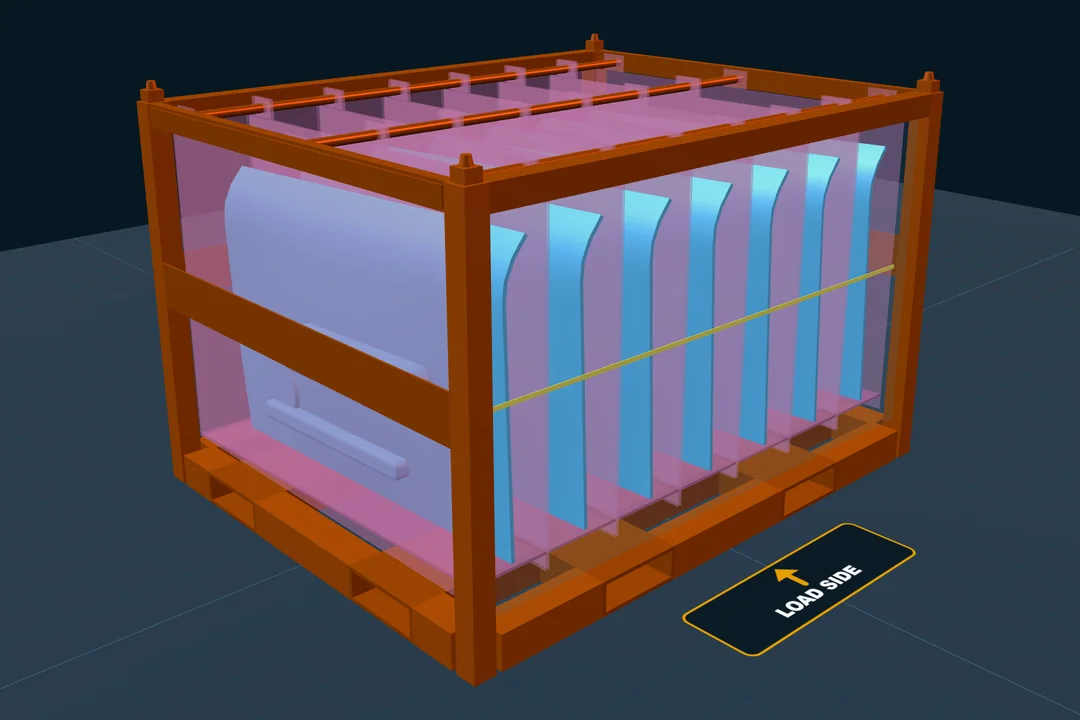
How a bag rack works
Parts stand on edge in the bags, thin side across, so the bags are narrow and deep. There is one bag per column across the loading face and one cell per level, and the operator loads from the open front.
The shelves slope slightly toward the back, 2 to 3 degrees, so parts settle in and stay put.
The bags hang from steel rods across the top. Pull the retainer bar and the rods slide out, so a bag can be changed without tools or cutting. No steel crosses the loading face.
Good for
- Soft trim, carpets and insulators
- Door trim panels, pillars and headers
- Some charge air coolers
- Any lighter part where a hard contact would mark the surface
Fabric, closures and frame
Fabric
Brushed polyester for Class A parts, heavy-duty PVC laminate for the rest. Velcro along the sidewalls joins the bags to each other and to the posts.
Shelves
Plastic stiffeners in the shelves and thin HDPE on the cell floors, so the bags keep their shape.
Closures
Open cells, retention straps, a clear vinyl curtain, or straps plus curtain. Corrugated plastic side, top and back panels are optional.
Frame
Square steel posts with nesting caps so racks stack, on a fork-tube floor grid with 4-way fork entry.
Height
A rule of thumb we design to: keep the rack about 53 in tall or less, so parts are easy to load and unload. A rack only goes taller when the part needs it.
Collapsible
The rods, bags and curtain come out and ride home on the base. More on collapsible racks.
How a PSS rack project runs
- Try it on your partOpen the 3D Packaging Studio, free in your browser. Upload a STEP, IGES, STL, OBJ or GLB file, or type in the part size. Your CAD file stays on your computer.
- Send it to PSSRequest a PSS review from the Studio, or send us your part and ask for a free concept design.
- Design and prototype3D CAD around your part, then a prototype to check fit, function and durability before production.
- Build and supportProduction fleet, delivery, and later repairs, reworks, replacement dunnage and fleet additions.
Questions we hear
What kind of parts go in a bag rack?
Lighter parts that need a soft touch: soft trim, carpets, insulators, door trim panels, pillars and headers. Heavier parts (over about 15 lb) and very tall cells get a closer look from PSS engineering. Large fascias and bumper covers usually go on a shelf rack with dividers instead.
Can worn bags be replaced?
Yes. The bags hang from removable rods, so a bag comes out without cutting anything. PSS also supplies replacement dunnage for racks already in service.
How are parts kept in the bags?
Open cells, retention straps, a clear vinyl curtain across the front, or straps and a curtain together. The curtain also keeps dust out.
Can a bag rack fold for the trip back?
Yes. On a collapsible bag rack the rods, bags and curtain come out and ride home on the base. PSS engineers each collapsible bag rack individually.
Other rack types
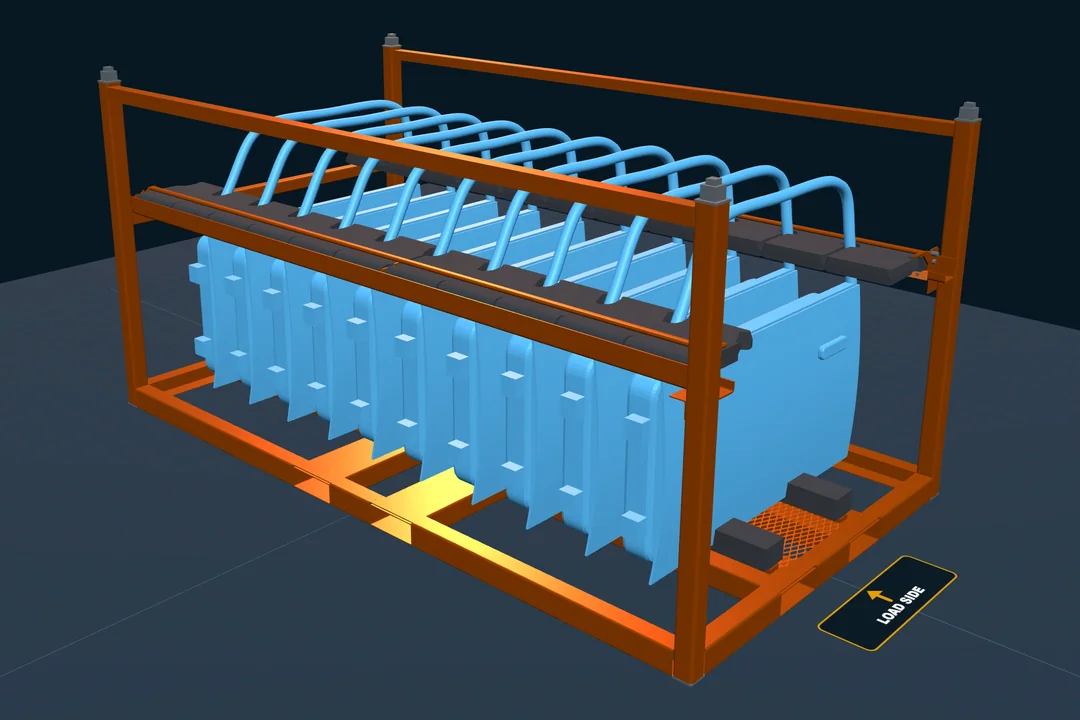
Flipper racks
Panels stand on edge between pivoting dunnage flippers. Hoods, doors, liftgates, roofs, fenders.
Read more ›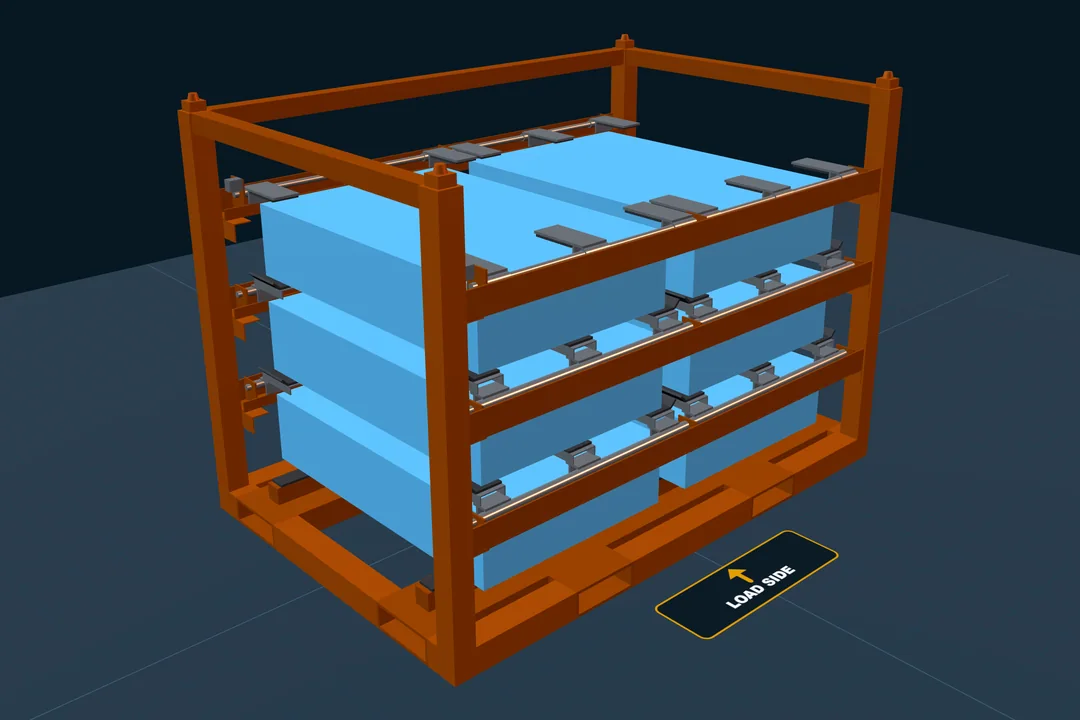
Load flipper racks
Flat parts lie tier on tier on swing-down steel flippers. Frame rails, crossmembers, floor pans.
Read more ›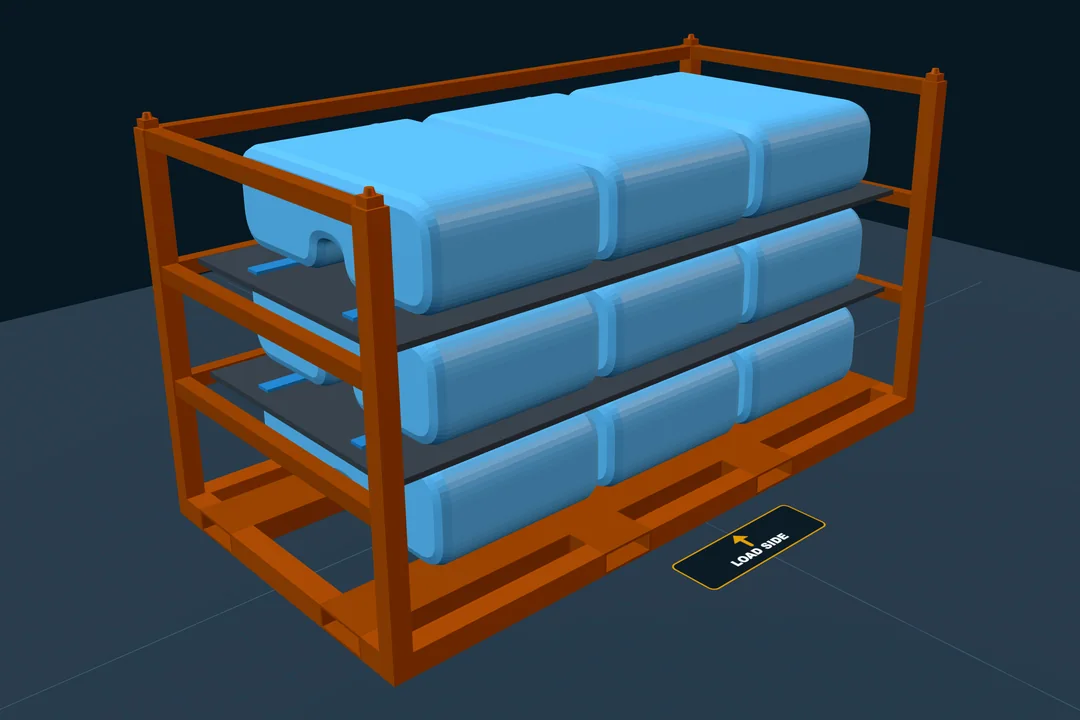
Shelf racks
Levels with strips, combs, trays or dividers, and a lock across the front. Tanks, radiators, modules.
Read more ›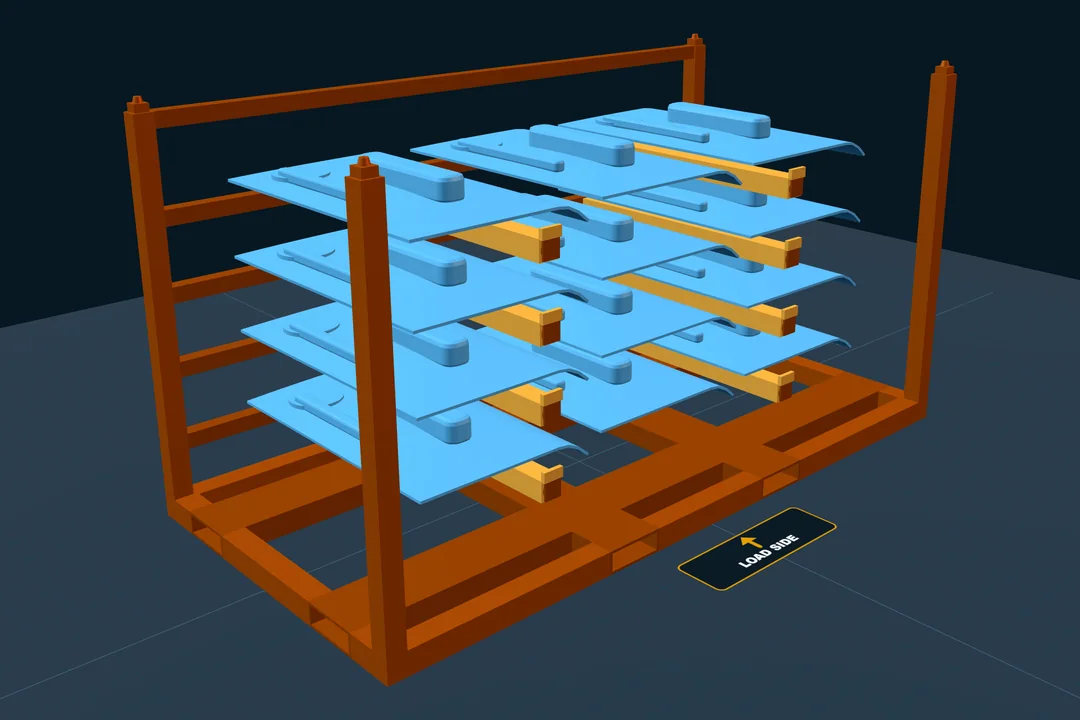
Cantilever racks
Arms reach in from the back, so the front stays open. Carpets, trim and panels.
Read more ›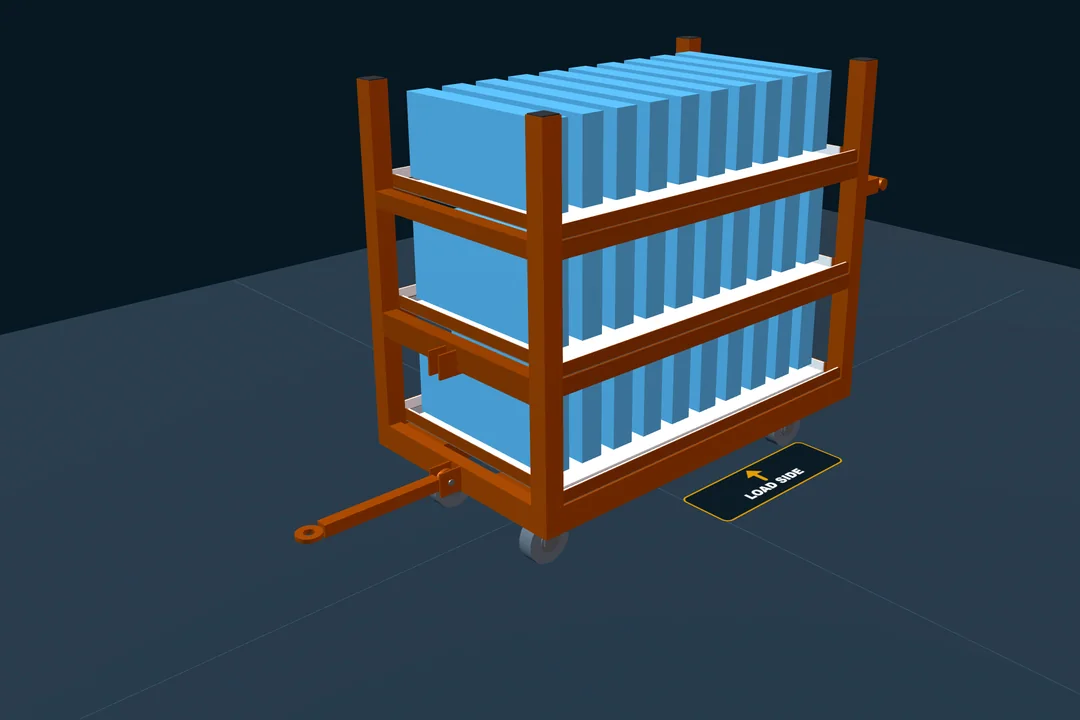
Dunnage carts & dollies
Steel carts on casters for lineside delivery, pushed by hand or towed in a tugger train.
Read more ›Start with your part
Upload your part and the Studio lays out the bags around it, so you can see the cell size, the count and the rack size. Or send PSS the part and ask for a free concept design.