
Cantilever racksOpen front, arms that reach in
A cantilever rack holds parts on arms that reach forward from uprights at the back, with nothing in the way at the front. Parts slide on and off the arms from the open face.
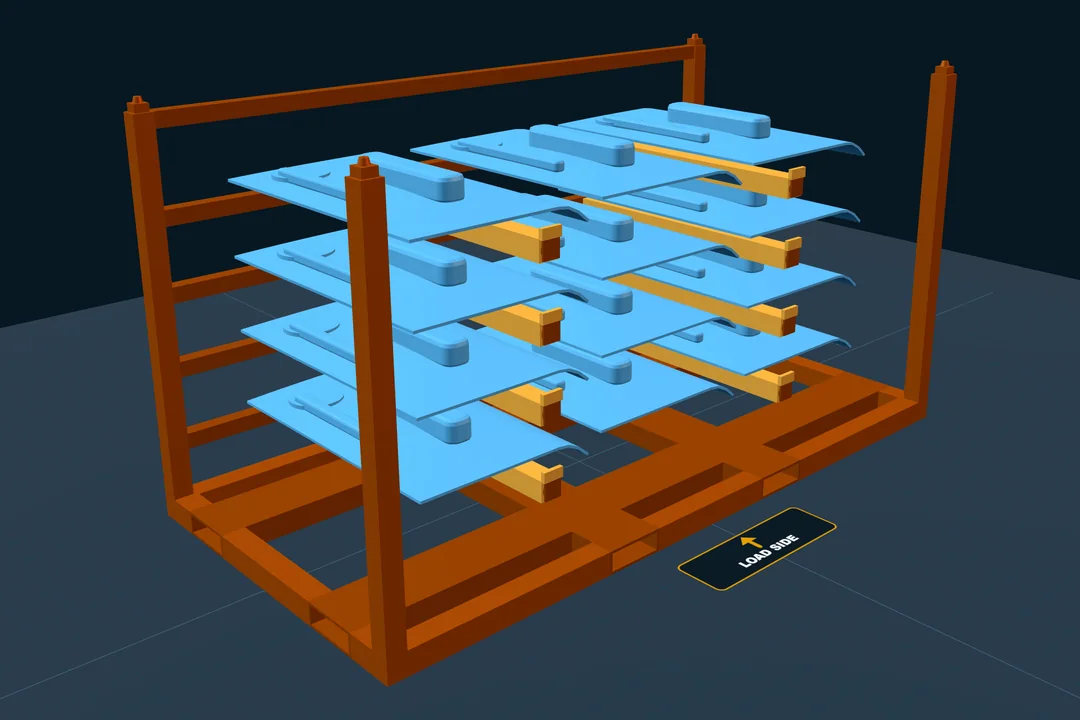
How it works
A single-sided cantilever rack has its uprights at the back; a double-sided one has a center spine with arms on both sides. Parts rest on, or hang from, the arms.
The arms are round pipe or square tube, each welded to its upright with a triangular gusset underneath, and their reach is adjustable to the part.
An end tab at each arm tip keeps parts from sliding off. Rod pegs, an end-stop plate or a swing lock-off bar are options.
Good for
- Carpets and other long, flexible trim
- Liftgate surrounds
- Some hood inners moving within the plant
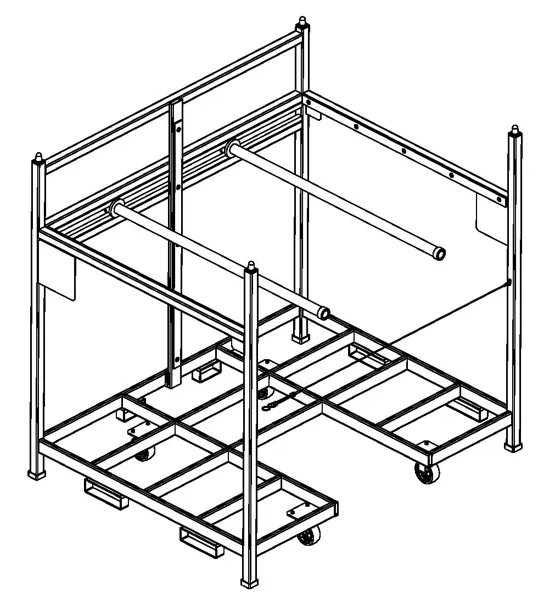
Protection and construction
Class A parts
Snap-on plastic tube covers on the arms, a vinyl-on-steel rear stop and vinyl on the end tabs. Class A (painted or show) surfaces never touch bare steel.
Other coverings
UHMW, urethane, HDPE or cross-link foam, to suit the part. Parts that are not Class A can ride on bare arms.
Frame and base
Four corner posts, stackable, on a low profile or truss base with fork entry. Casters are possible.
Height
A rule of thumb we design to: keep the rack about 53 in tall or less, so parts are easy to load and unload. A rack only goes taller when the part needs it.
Collapsible
Collapsible cantilever racks are possible, and PSS designs each one individually. More on collapsible racks.
Shipping or in-plant
Built as a shipping rack that stacks on the truck, or as a work-in-process rack that stays in the plant.
How a PSS rack project runs
- Try it on your partOpen the 3D Packaging Studio, free in your browser. Upload a STEP, IGES, STL, OBJ or GLB file, or type in the part size. Your CAD file stays on your computer.
- Send it to PSSRequest a PSS review from the Studio, or send us your part and ask for a free concept design.
- Design and prototype3D CAD around your part, then a prototype to check fit, function and durability before production.
- Build and supportProduction fleet, delivery, and later repairs, reworks, replacement dunnage and fleet additions.
Questions we hear
Why choose a cantilever rack?
The front stays open. With no posts or cross members in the way at the load face, long or floppy parts slide on and off the arms easily.
Can the arms be adjusted?
Yes. Arm reach is adjustable, and arms can be round pipe or square tube, each welded to its upright with a gusset underneath.
How are parts kept from sliding off?
An end tab at each arm tip is standard. Rod pegs, an end-stop plate or a swing lock-off bar are options.
Other rack types
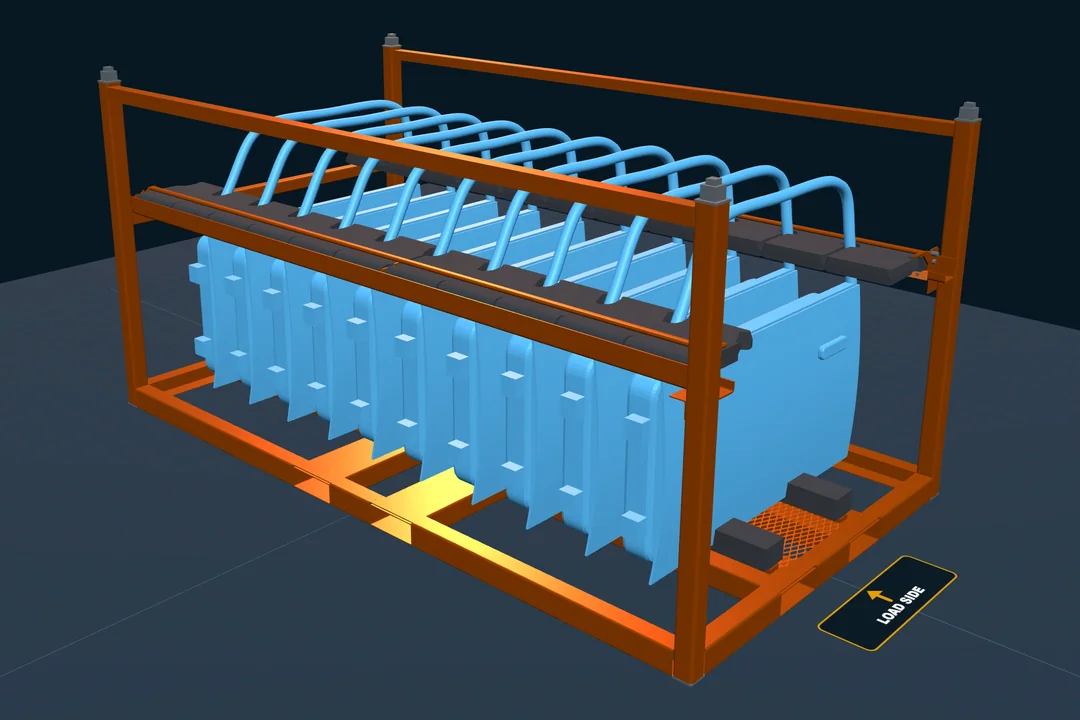
Flipper racks
Panels stand on edge between pivoting dunnage flippers. Hoods, doors, liftgates, roofs, fenders.
Read more ›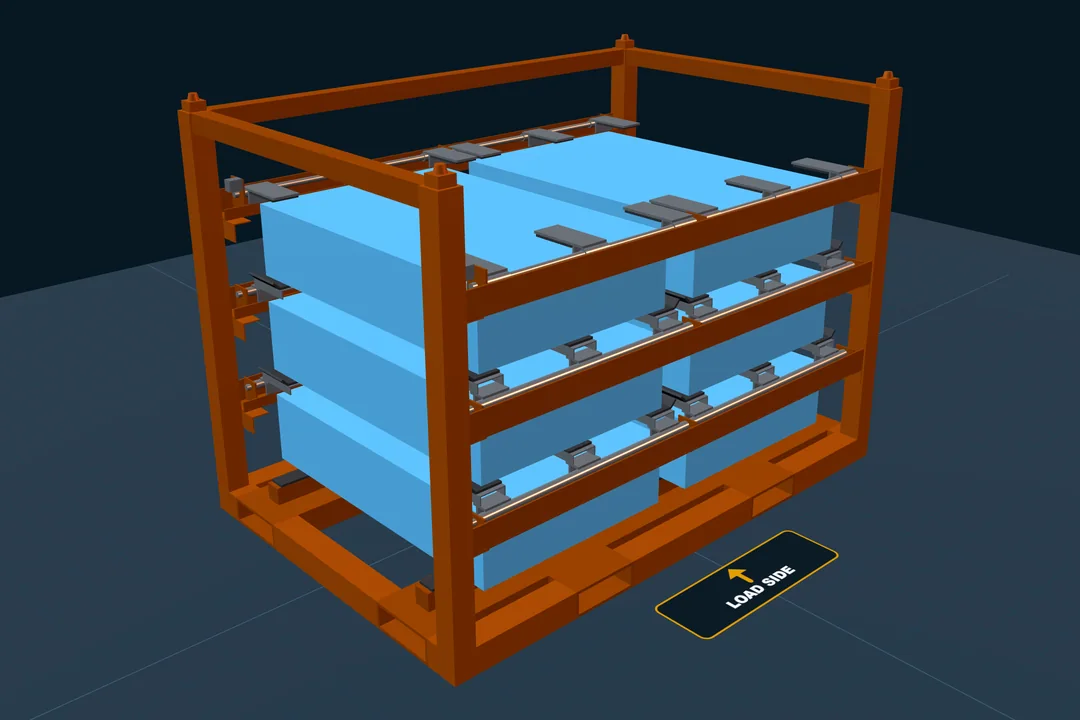
Load flipper racks
Flat parts lie tier on tier on swing-down steel flippers. Frame rails, crossmembers, floor pans.
Read more ›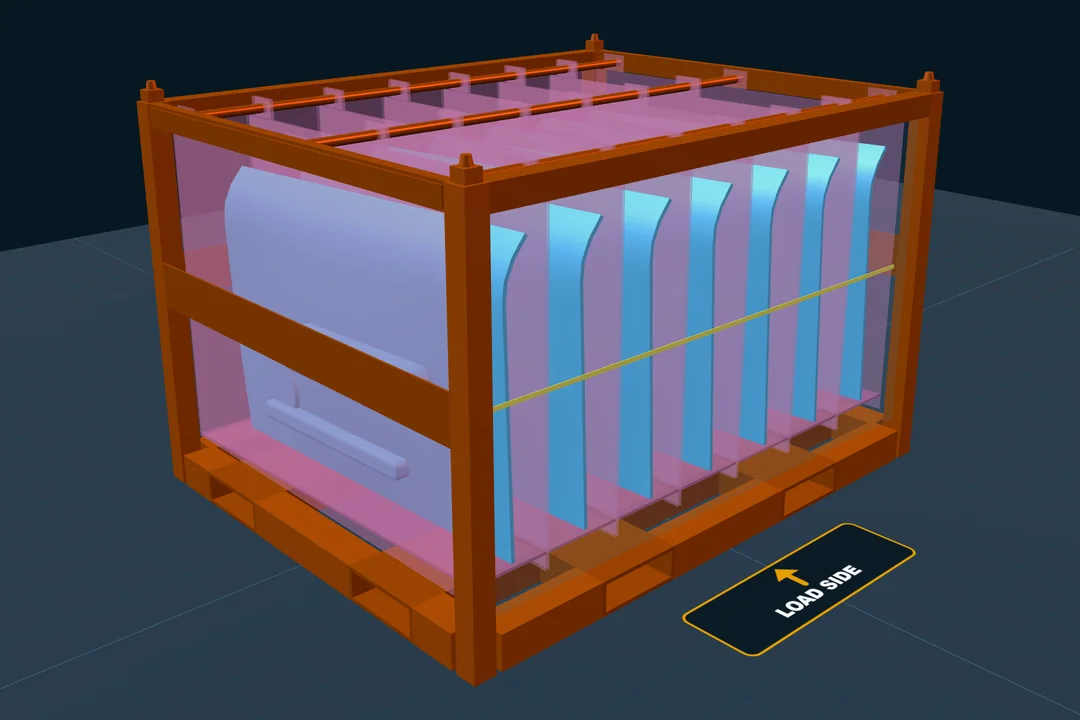
Bag racks
Sewn fabric dunnage cells for lighter parts. Soft trim, carpets, insulators, trim panels.
Read more ›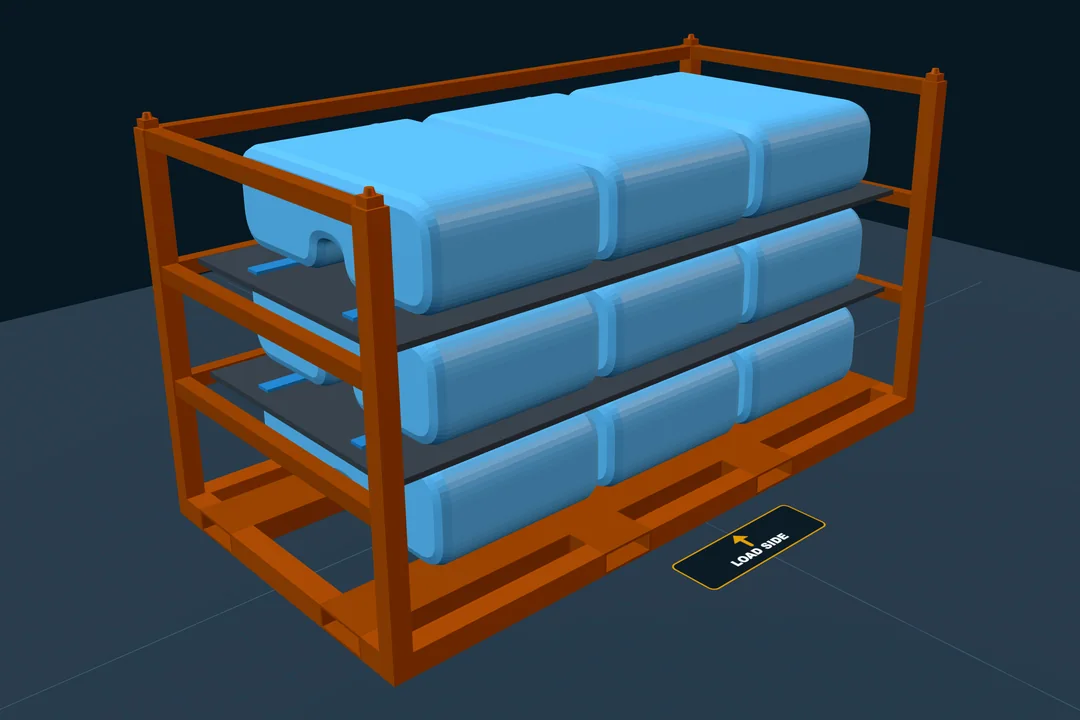
Shelf racks
Levels with strips, combs, trays or dividers, and a lock across the front. Tanks, radiators, modules.
Read more ›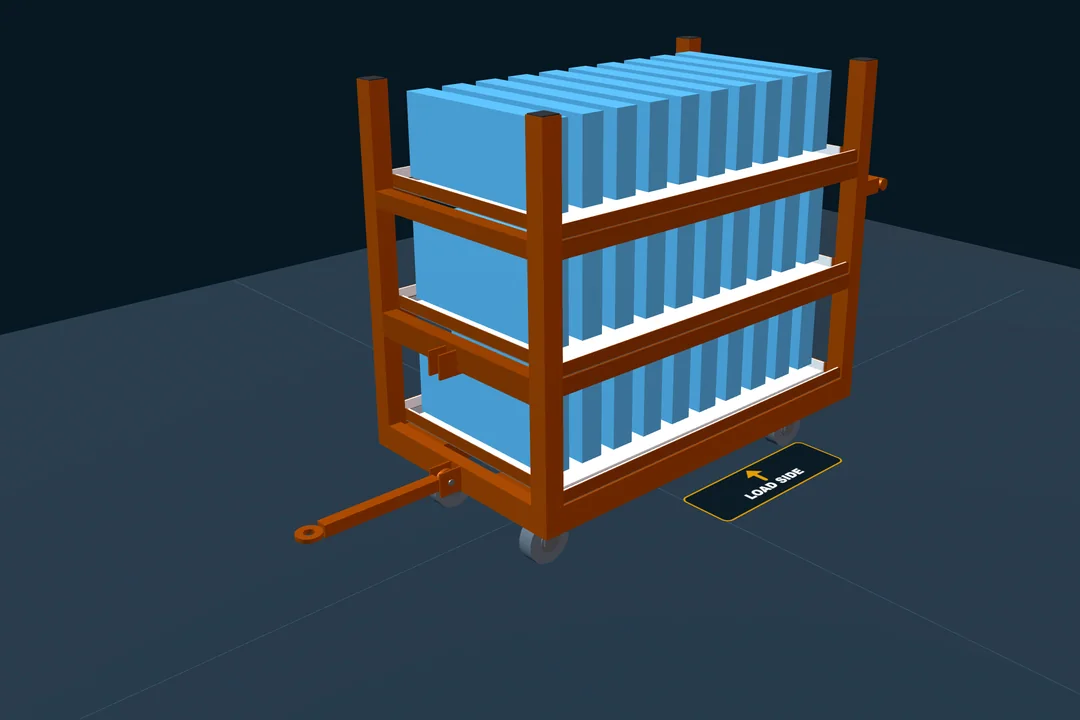
Dunnage carts & dollies
Steel carts on casters for lineside delivery, pushed by hand or towed in a tugger train.
Read more ›Start with your part
Upload your part and the Studio lays it out on the arms, so you can see the count and the rack size. Or send PSS the part and ask for a free concept design.