
Shelf racksLevels, dunnage and a lock across the front
A shelf rack holds parts on levels between four corner posts. Parts load from one face, and a lock bar, gate or comb across that face keeps them in. The dunnage on each level is chosen for the part.
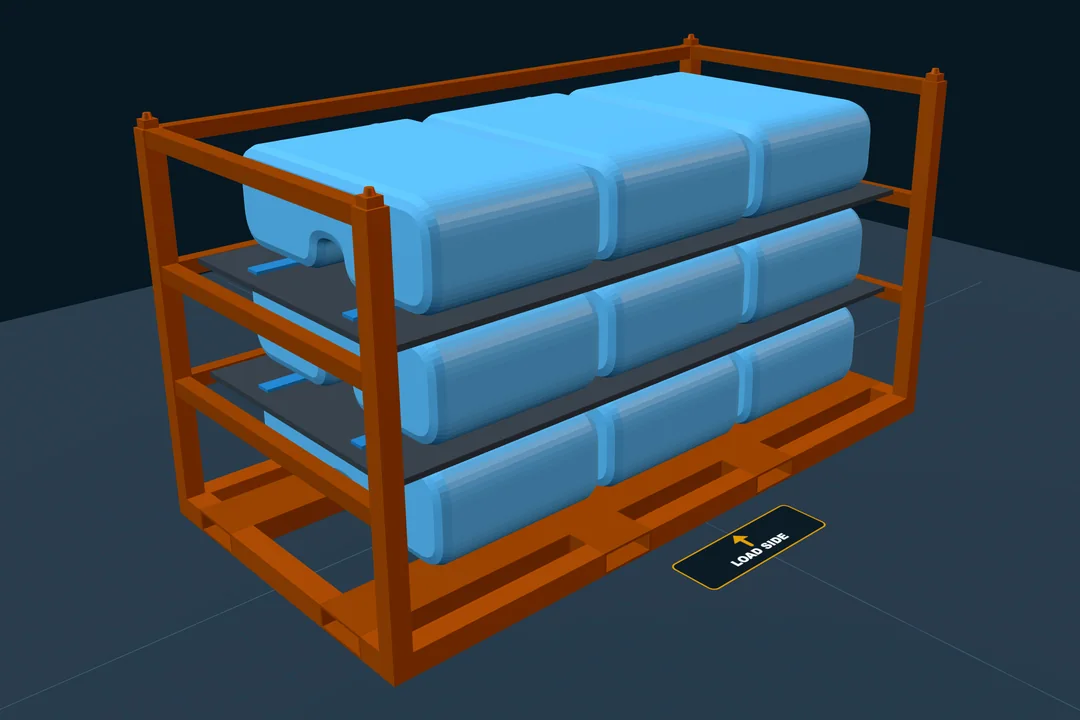
Dunnage for each level
Support strips
A tube bed with plastic tube covers, a urethane front edge, rubber rear pads and vinyl-on-steel lead-ins at the sides.
HDPE combs
The part stands on edge in slots and touches only the combs. Common for radiators and charge air coolers.
Vacuum-formed trays
A tray at each level shaped to the part. Common for HVAC modules.
Corrugated plastic dividers
Light, replaceable separation for parts like fascias and bumpers.
Urethane supports
For heavy parts like engines and driveline components.
Part protection
Class A (painted or show) surfaces never touch bare steel. Contact faces are urethane, plastic, rubber or vinyl.
Keeping parts in
- Candy cane lock bar at each level, across the load face. Its pin rides up a slotted plate on each front post and drops into the hook.
- Swing gate hinged on one post and latched on the other, over the whole load face.
- Swing comb, a hinged bar over each level with HDPE tines that drop between the parts.
Good for
- Fuel tanks and DEF tanks
- Radiators and charge air coolers
- HVAC modules
- Engines and powertrain parts
- Fascias and bumpers
Welded shelf frames hang from the corner posts and a rear frame, on a low profile or truss base with 4-way fork entry. A rule of thumb we design to: keep the rack about 53 in tall or less, so parts are easy to load and unload. A rack only goes taller when the part needs it.
How a PSS rack project runs
- Try it on your partOpen the 3D Packaging Studio, free in your browser. Upload a STEP, IGES, STL, OBJ or GLB file, or type in the part size. Your CAD file stays on your computer.
- Send it to PSSRequest a PSS review from the Studio, or send us your part and ask for a free concept design.
- Design and prototype3D CAD around your part, then a prototype to check fit, function and durability before production.
- Build and supportProduction fleet, delivery, and later repairs, reworks, replacement dunnage and fleet additions.
Questions we hear
Which dunnage should a shelf rack use?
It follows the part. Fuel tanks usually sit on support strips, radiators and charge air coolers stand in HDPE combs, HVAC modules sit in vacuum-formed trays, and fascias and bumpers are kept apart with corrugated plastic dividers. Pick a part type in the Studio and it starts from the setup PSS usually builds.
How are parts held in?
A candy cane lock bar at each level, a swing gate over the load face, or a swing comb with HDPE tines that drop between the parts. Some racks need no retention at all.
Do shelf racks stack?
Yes. Corner posts carry stacking caps, and the base takes forks from all four sides.
Other rack types
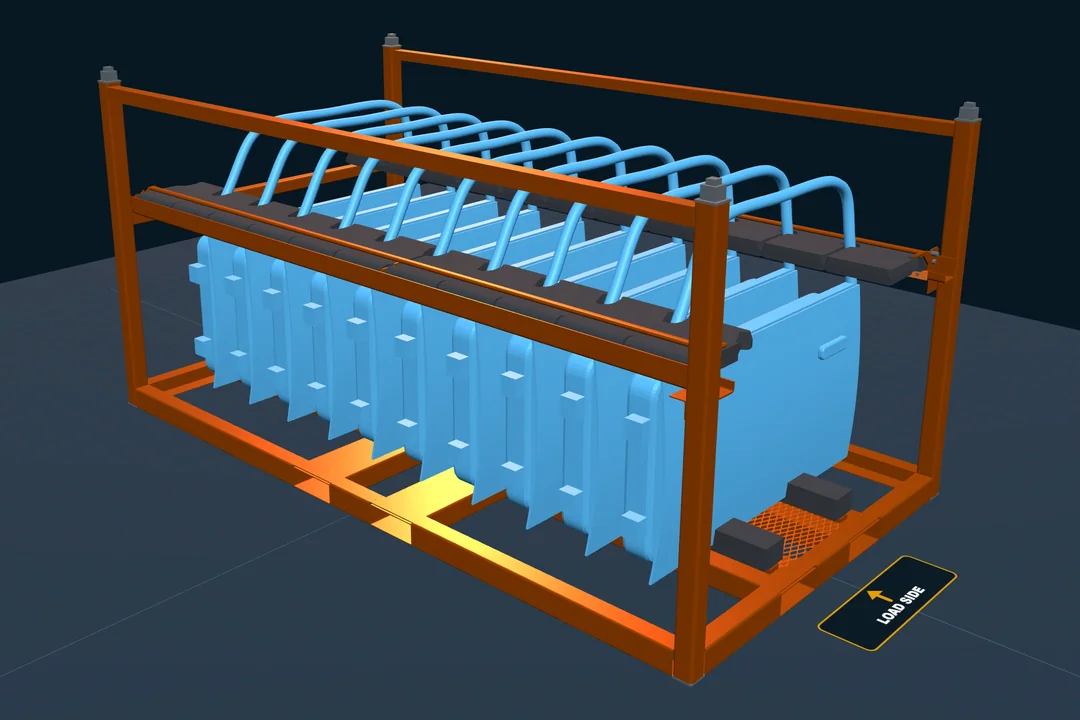
Flipper racks
Panels stand on edge between pivoting dunnage flippers. Hoods, doors, liftgates, roofs, fenders.
Read more ›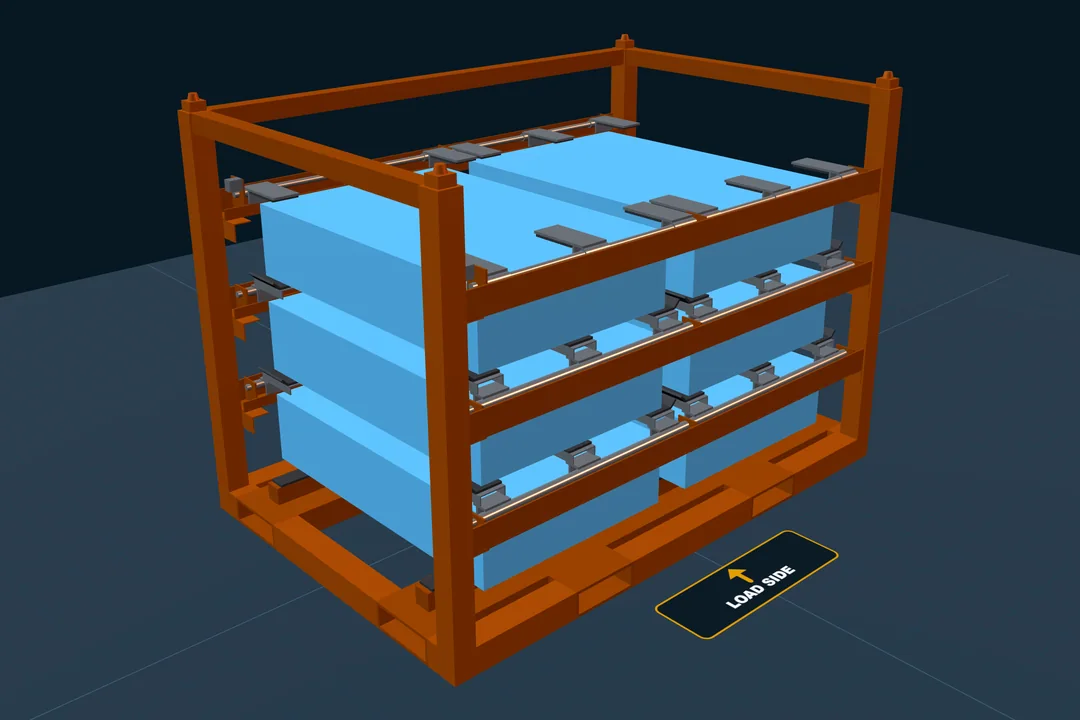
Load flipper racks
Flat parts lie tier on tier on swing-down steel flippers. Frame rails, crossmembers, floor pans.
Read more ›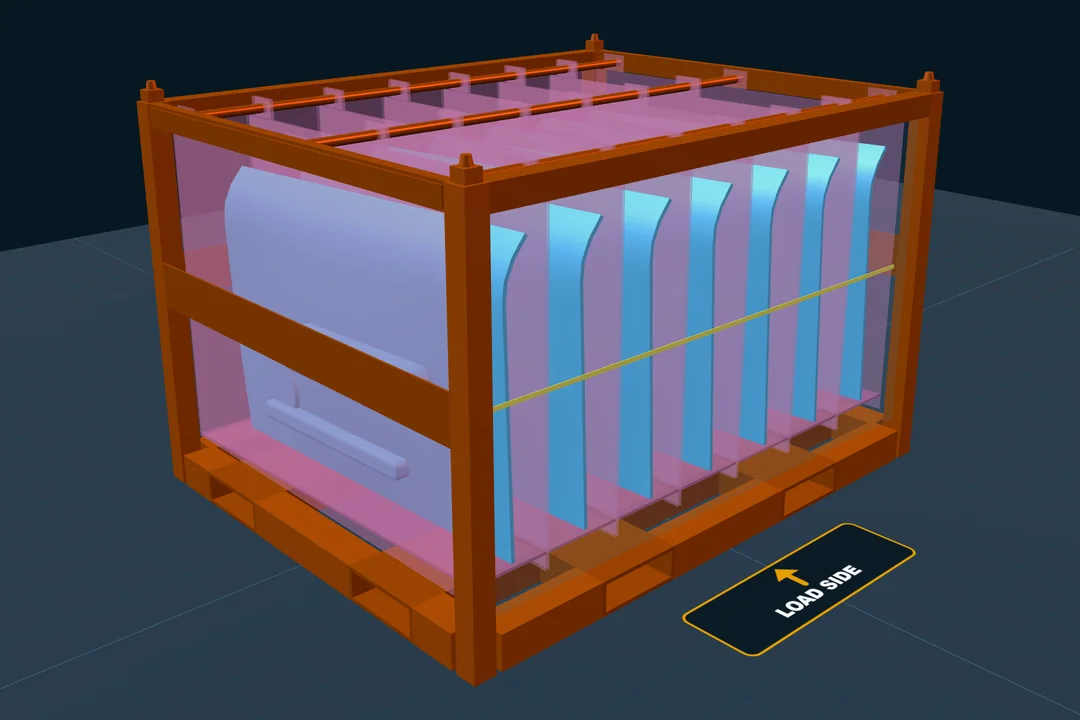
Bag racks
Sewn fabric dunnage cells for lighter parts. Soft trim, carpets, insulators, trim panels.
Read more ›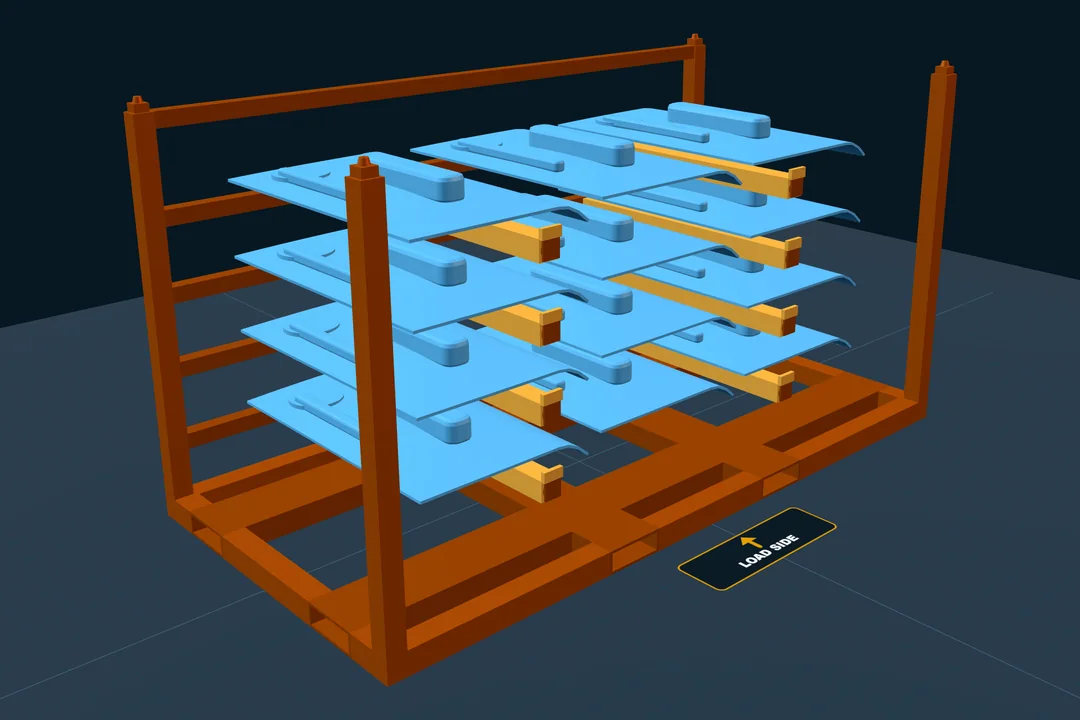
Cantilever racks
Arms reach in from the back, so the front stays open. Carpets, trim and panels.
Read more ›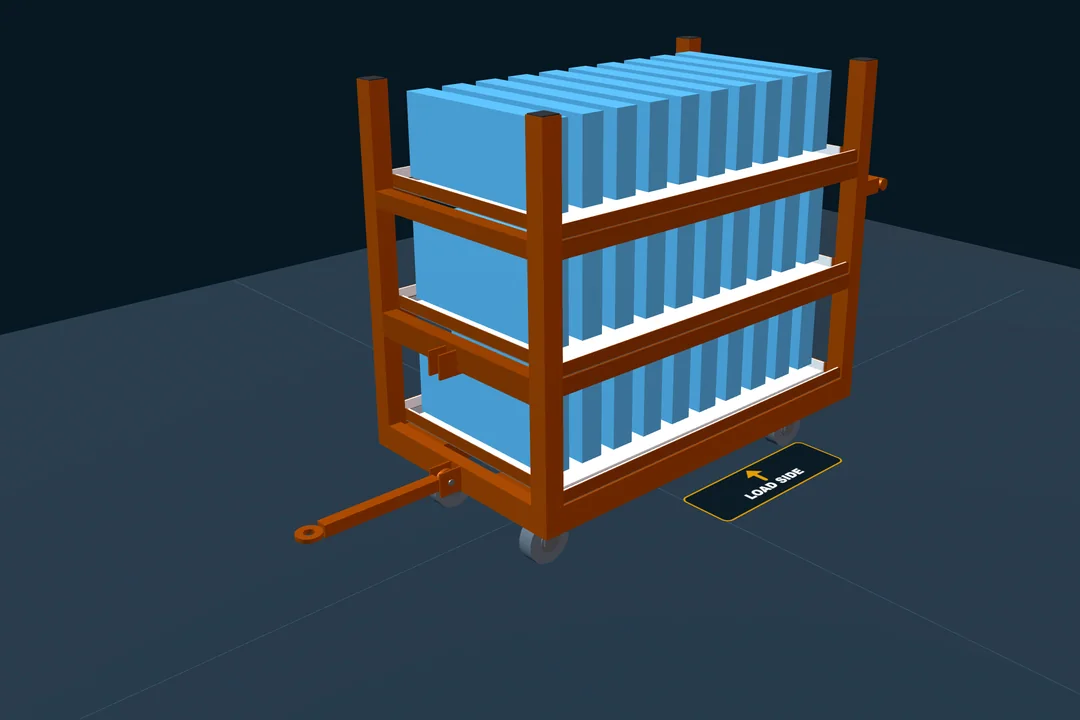
Dunnage carts & dollies
Steel carts on casters for lineside delivery, pushed by hand or towed in a tugger train.
Read more ›Start with your part
Upload your part and the Studio fills the levels, so you can see how many fit per level and how tall the rack gets. Or send PSS the part and ask for a free concept design.