
Load flipper racksParts lie flat, tier on tier
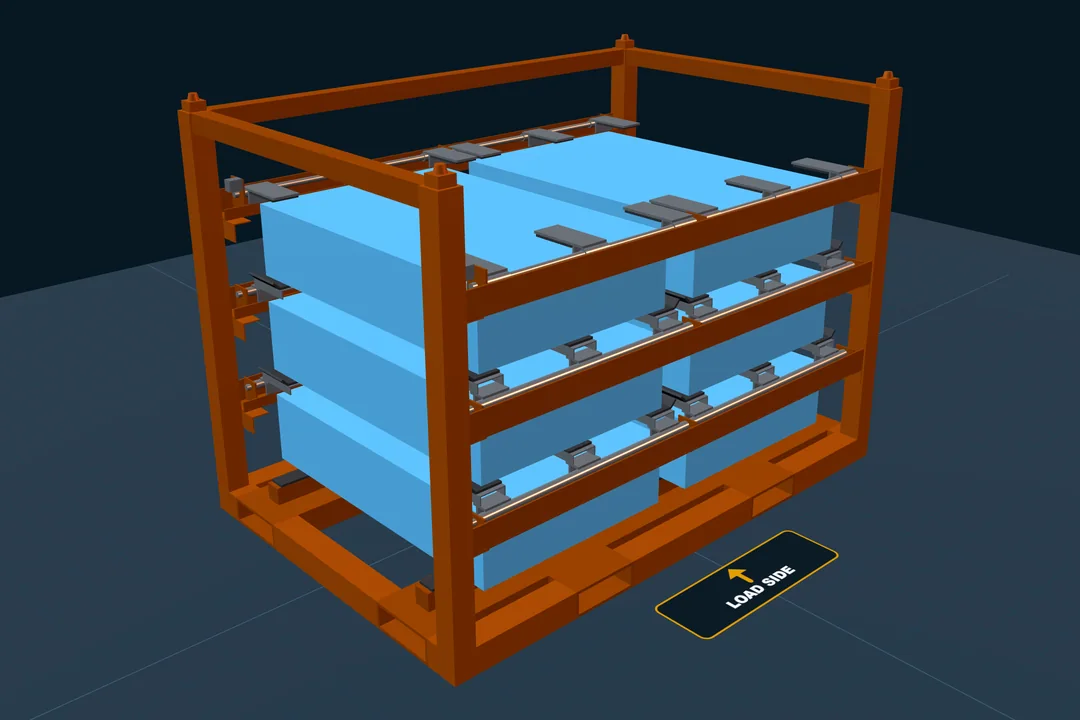
On a load flipper rack the flippers carry the part. Long, flat parts lie across the rack in tiers, and each tier rests on its own row of steel flippers that swing out of the way while the tier below is loaded or unloaded.
How it works
The bottom tier sits on two dunnage rails on the base. Every tier above it sits on steel flippers coming in from both long sides of the rack, one flipper per part on each side.
To load, swing the next level's flippers down, lay the parts on, and repeat. To unload, work from the top down, swinging each level's flippers up as you go. The rack loads from its long sides.
The level spacing is set by the part's height, so the rack carries as many tiers as fit without wasting space.
Good for
- Frame rails and crossmembers
- Floor pans
- Other long, flat stampings and assemblies that are best carried lying down
Parts that are better carried standing on edge, like hoods and doors, usually go on a separator flipper rack instead.
How PSS builds them
The flipper
A steel sleeve on a pivot pipe, with formed arms, lead-in lips and a stop on the holder, so it lands in the same place every time.
Part protection
For Class A parts the flipper faces are vinyl on steel. Bare steel is used only where the part is not Class A.
Handed or common
One common flipper when the part is the same end to end; left- and right-hand flippers when it is not.
Frame and base
Corner posts and stacking caps. Low profile base as standard, truss as an option, with 4-way fork entry.
Shipping or in-plant
A shipping rack gets a latched hold-down over the top tier. A rack that stays in the plant does not need one.
Height
A rule of thumb we design to: keep the rack about 53 in tall or less, so parts are easy to load and unload. A rack only goes taller when the part needs it.
How a PSS rack project runs
- Try it on your partOpen the 3D Packaging Studio, free in your browser. Upload a STEP, IGES, STL, OBJ or GLB file, or type in the part size. Your CAD file stays on your computer.
- Send it to PSSRequest a PSS review from the Studio, or send us your part and ask for a free concept design.
- Design and prototype3D CAD around your part, then a prototype to check fit, function and durability before production.
- Build and supportProduction fleet, delivery, and later repairs, reworks, replacement dunnage and fleet additions.
Questions we hear
How is a load flipper rack loaded?
From the bottom up. The first tier goes on the dunnage rails on the base. Then the next level's flippers swing down, the parts go on, and so on. Unloading runs from the top down, swinging each level's flippers up out of the way.
Will steel flippers mark a painted part?
Not on a PSS rack. For Class A parts the flipper faces are vinyl on steel. Bare or stainless steel faces are used only on parts that are not Class A.
What if our part is different at each end?
Then the flippers are made left- and right-hand to match it. When the part is the same end to end, one common flipper serves both sides.
Other rack types
Flipper racks
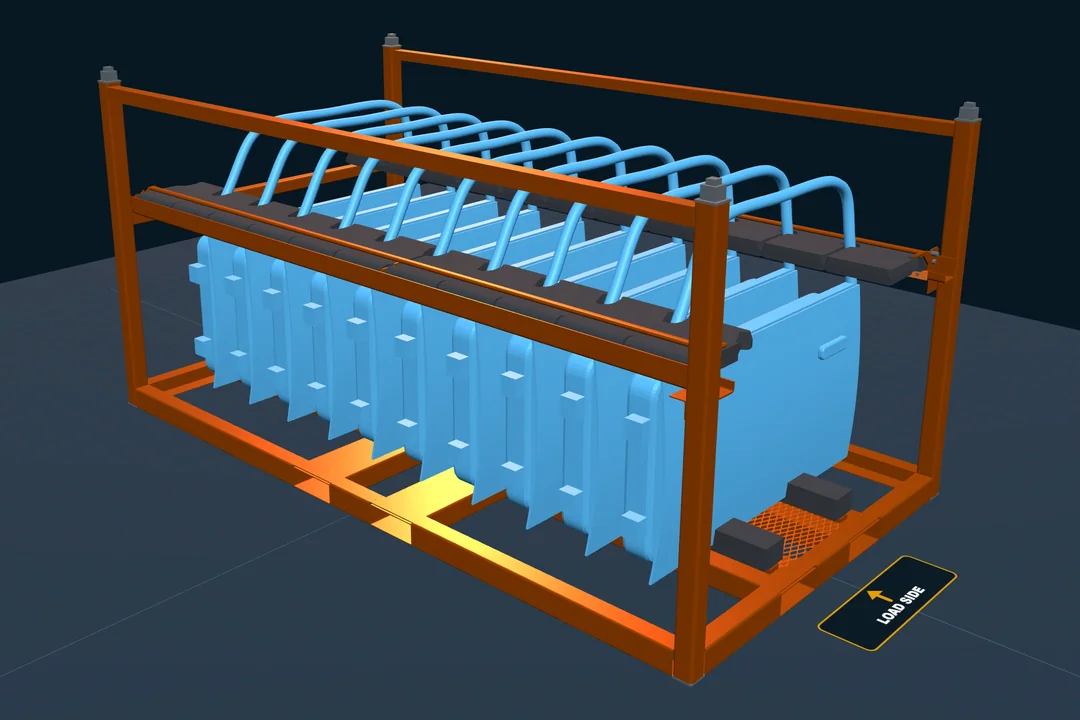
Panels stand on edge between pivoting dunnage flippers. Hoods, doors, liftgates, roofs, fenders.
Read more ›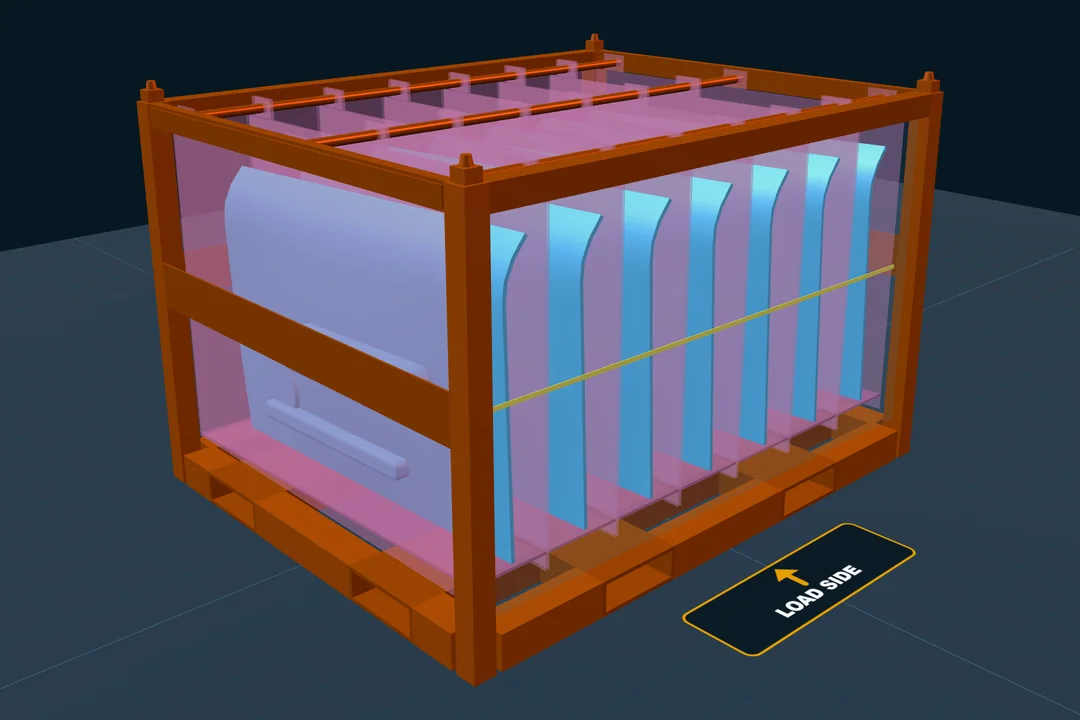
Bag racks
Sewn fabric dunnage cells for lighter parts. Soft trim, carpets, insulators, trim panels.
Read more ›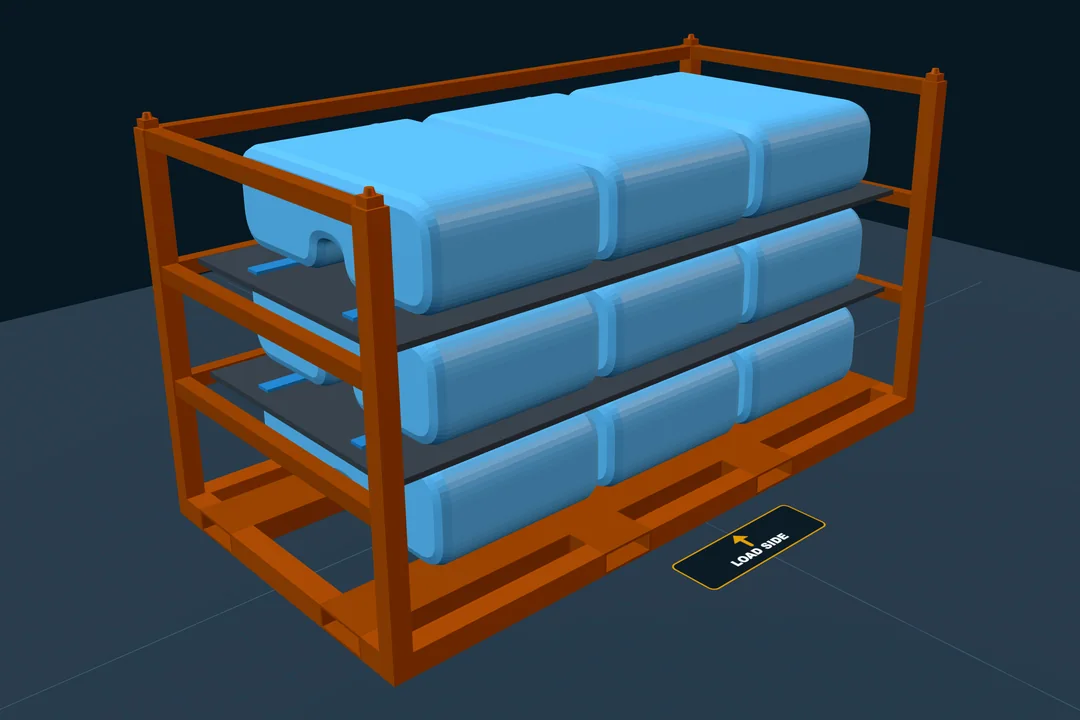
Shelf racks
Levels with strips, combs, trays or dividers, and a lock across the front. Tanks, radiators, modules.
Read more ›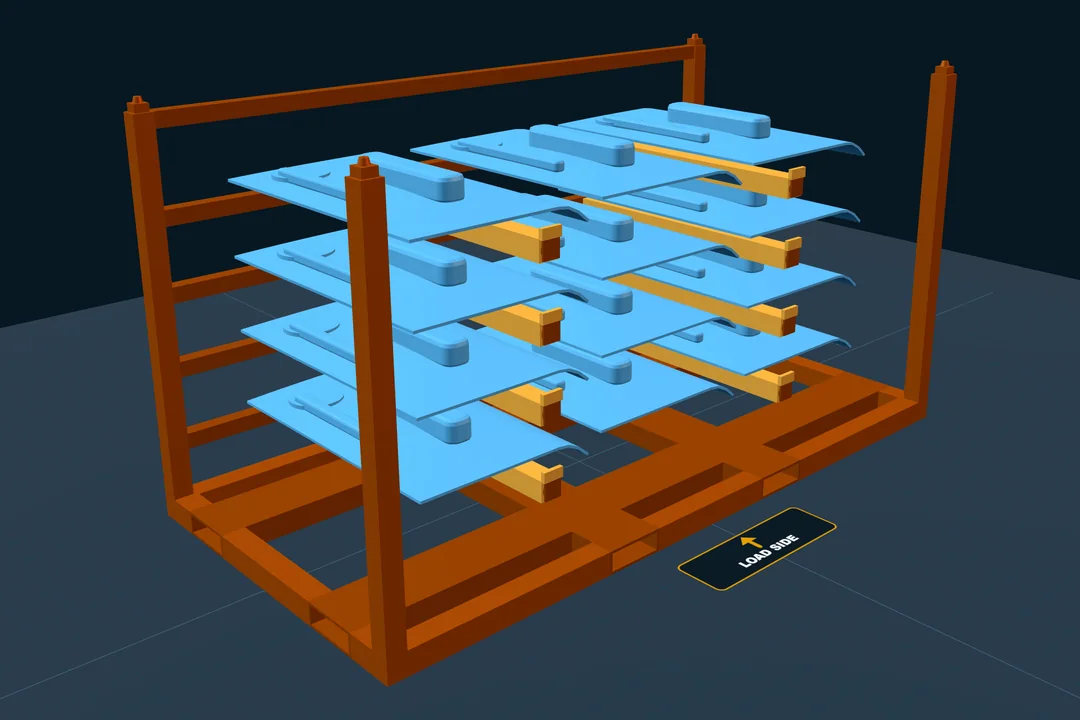
Cantilever racks
Arms reach in from the back, so the front stays open. Carpets, trim and panels.
Read more ›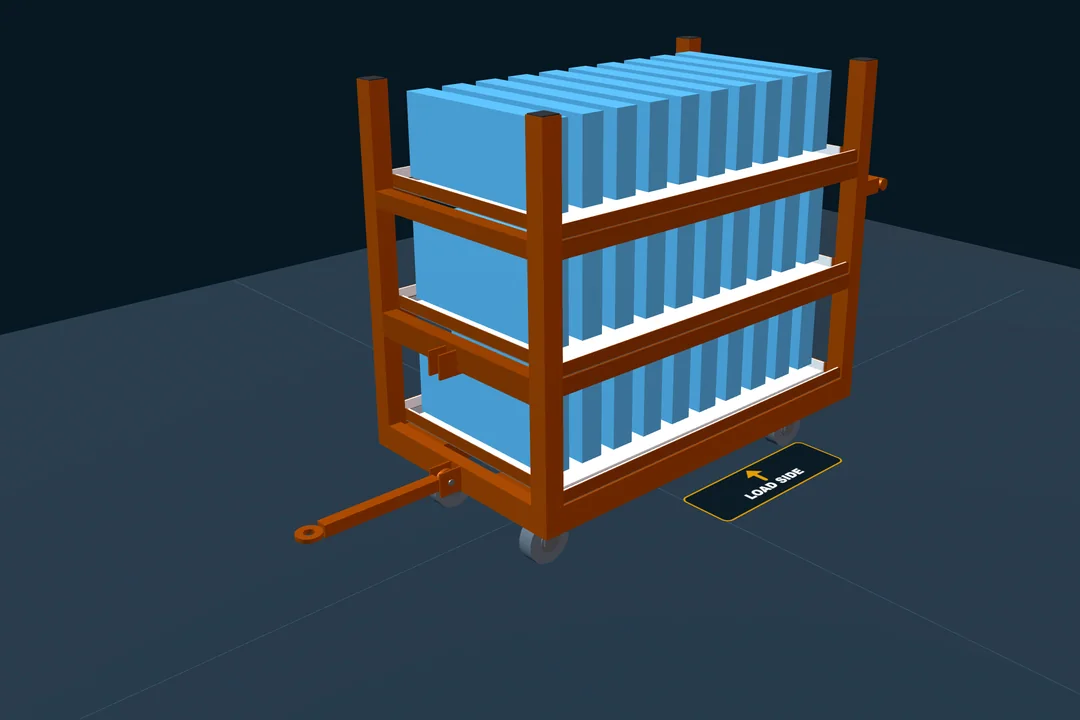
Dunnage carts & dollies
Steel carts on casters for lineside delivery, pushed by hand or towed in a tugger train.
Read more ›Start with your part
Upload your part and the Studio stacks it on load-supporting flippers, so you can see how many tiers fit and how big the rack is. Or send PSS the part and ask for a free concept design.