
Dunnage carts & dolliesParts to the line, by hand or tugger
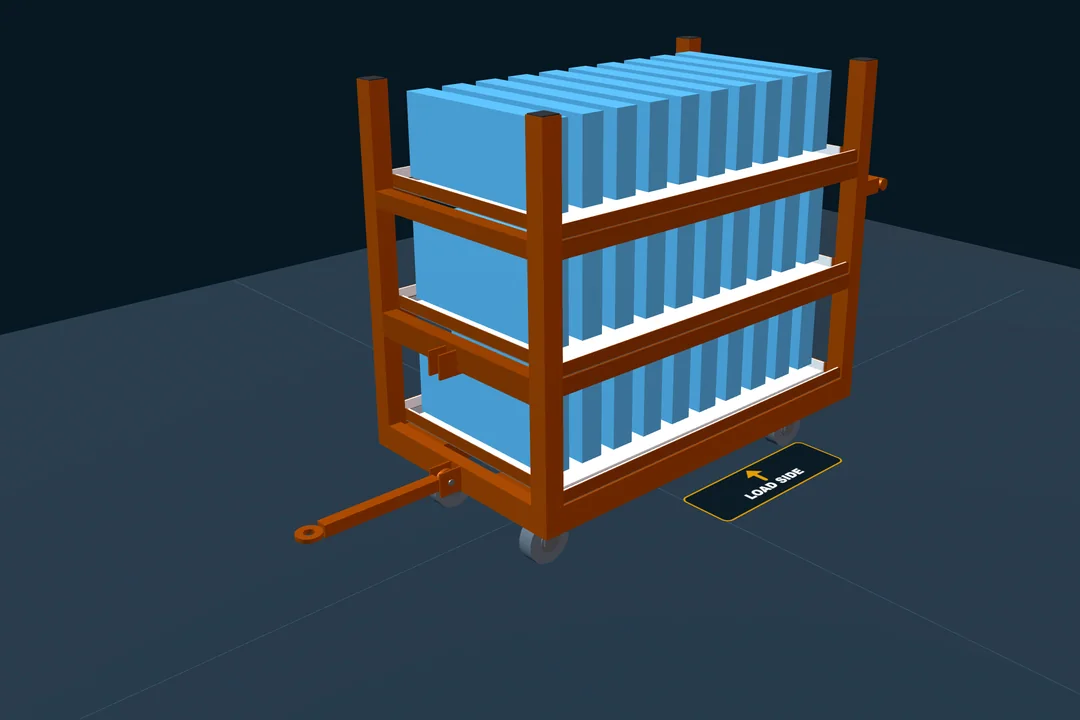
Cart or dolly, it is the same thing: a welded steel frame on casters that brings parts to the line. PSS builds them around the part and the route, with decks, dunnage and a hitch that matches your tugger.
How PSS builds carts
- Four casters, two swivel and two rigid, with polyurethane wheels.
- One to four decks, with expanded metal on the base deck and angle lips on the deck edges (on all sides when the cart is towed).
- Loose, toted or kitted parts, with part-specific dunnage where it helps.
- A forkable base, so a cart can still be moved by lift truck.
- A step-on floor lock and a push handle.
Hitches and towing
Push it by hand, or tow it in a tugger train. A fold-up tongue tows a train, a pin eye suits a single cart, and a push cart needs no hitch. A rear clevis tows the next cart, and the hitch height is matched to your tugger.
The drawings carry the basics for the floor: fold the tongue when parked, release the floor lock before towing, and never tow a stack.
Built for the person picking parts
Deck heights
Keep the lowest pick deck about 12 in or more off the floor, and the top deck about 48 in or lower where possible.
Part protection
HDPE deck liners and lip strips for Class A parts. Class A (painted or show) surfaces never touch bare steel.
Loose, toted or kitted
The deck count and spacing follow the parts and the containers they ride in, so the cart carries what the line needs in one trip.
How a PSS rack project runs
- Try it on your partOpen the 3D Packaging Studio, free in your browser. Upload a STEP, IGES, STL, OBJ or GLB file, or type in the part size. Your CAD file stays on your computer.
- Send it to PSSRequest a PSS review from the Studio, or send us your part and ask for a free concept design.
- Design and prototype3D CAD around your part, then a prototype to check fit, function and durability before production.
- Build and supportProduction fleet, delivery, and later repairs, reworks, replacement dunnage and fleet additions.
Questions we hear
Is a cart the same as a dolly?
Yes. People call them carts, dollies, lineside carts or dunnage carts. At PSS they are the same thing: a steel frame on casters that brings parts to the line.
Will the cart work with our tugger?
The hitch height is matched to your tugger. Choose a fold-up tongue for towing in a train, a pin eye for a single cart, or no hitch for a push cart.
Can a cart protect painted parts?
Yes. Class A carts get HDPE deck liners and lip strips, so painted parts never touch bare steel. Part-specific dunnage can be added to any deck.
Do carts stack or fold?
No. Carts are built to roll, not to stack: the posts take plugs instead of stacking caps. For packaging that ships and stacks, see the other rack types.
Other rack types
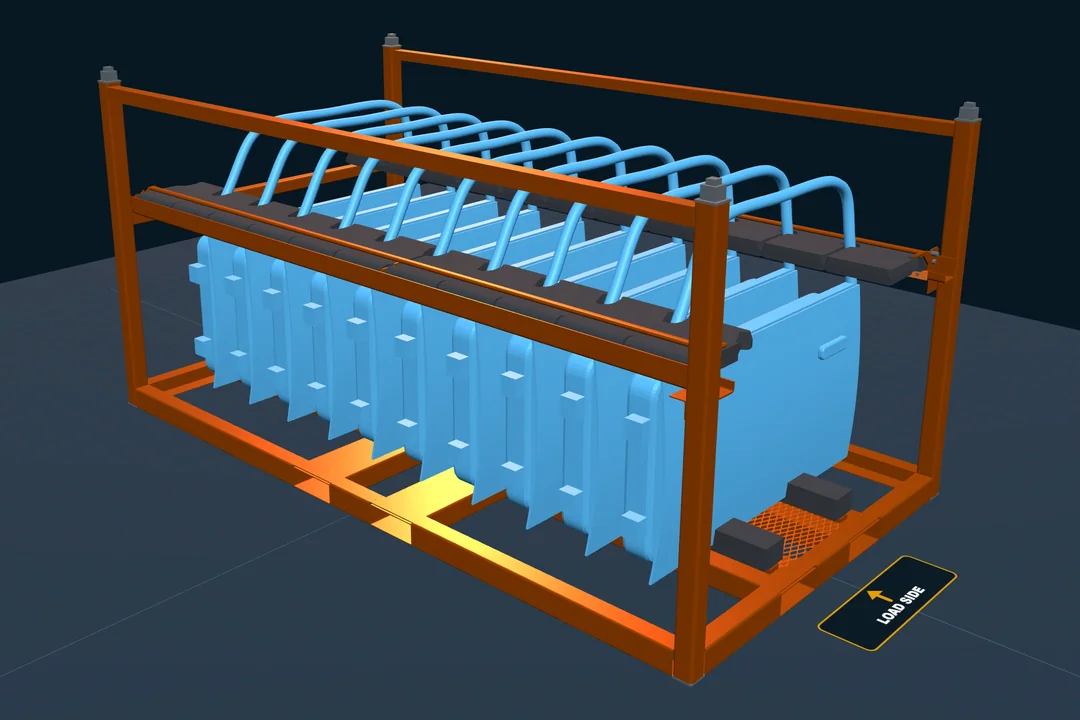
Flipper racks
Panels stand on edge between pivoting dunnage flippers. Hoods, doors, liftgates, roofs, fenders.
Read more ›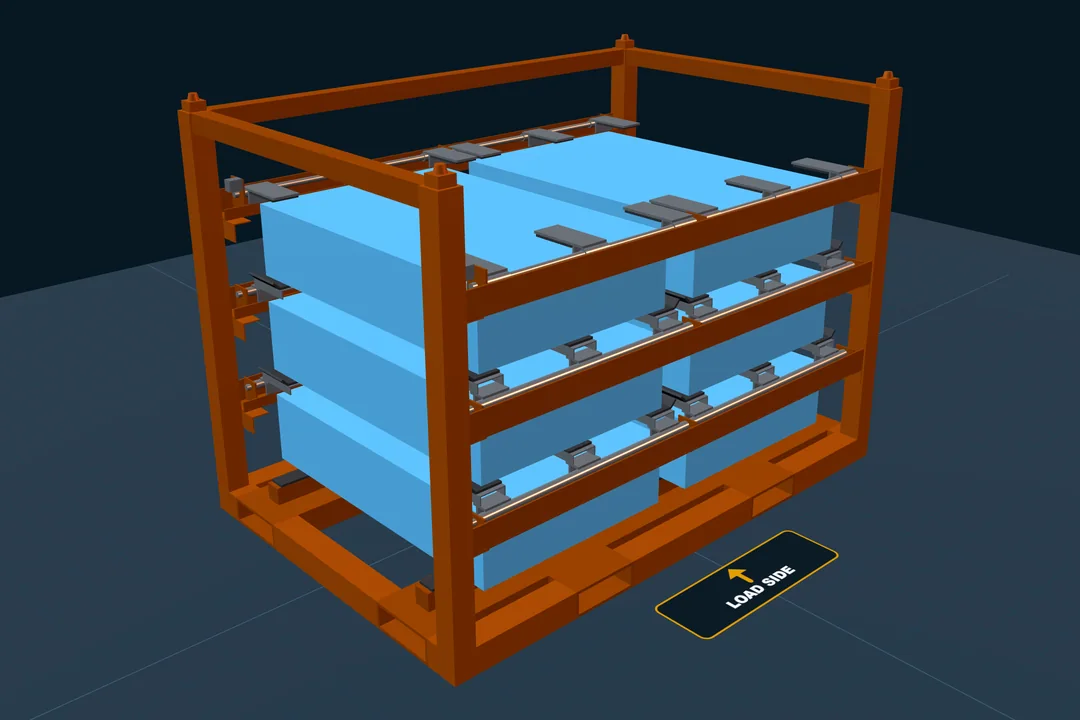
Load flipper racks
Flat parts lie tier on tier on swing-down steel flippers. Frame rails, crossmembers, floor pans.
Read more ›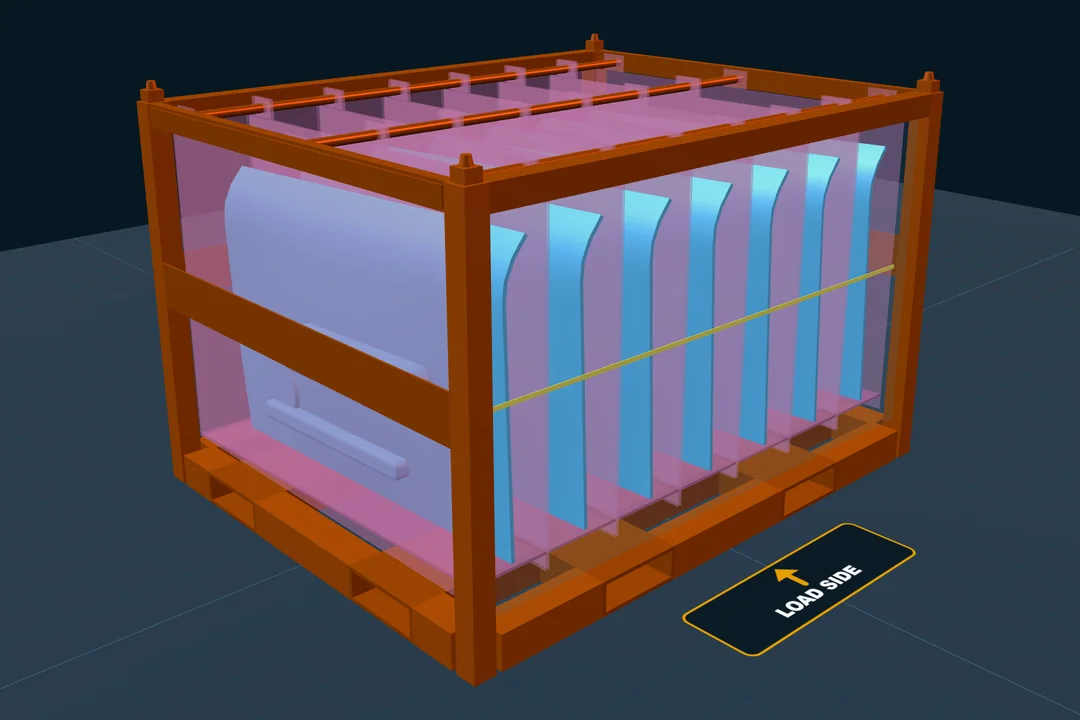
Bag racks
Sewn fabric dunnage cells for lighter parts. Soft trim, carpets, insulators, trim panels.
Read more ›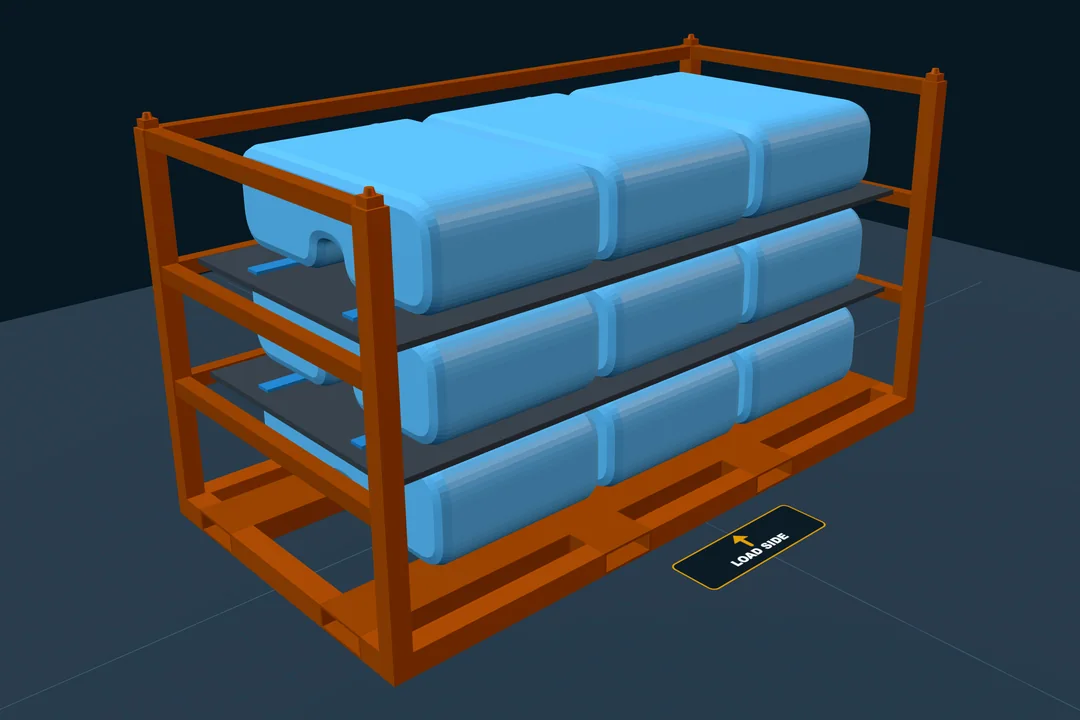
Shelf racks
Levels with strips, combs, trays or dividers, and a lock across the front. Tanks, radiators, modules.
Read more ›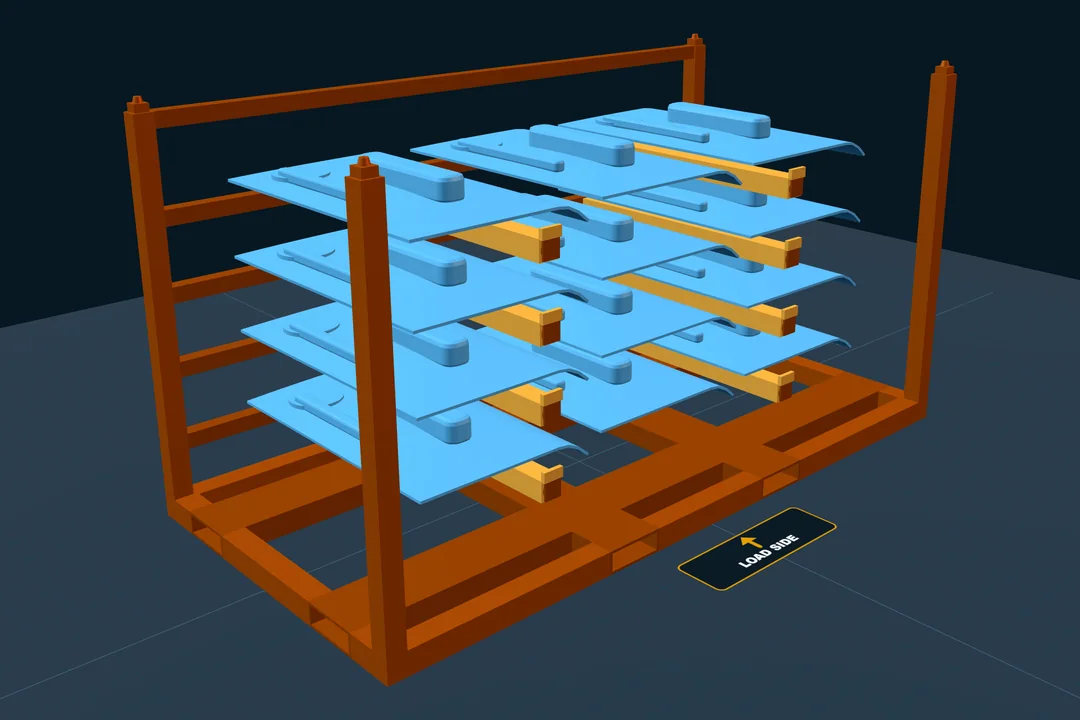
Cantilever racks
Arms reach in from the back, so the front stays open. Carpets, trim and panels.
Read more ›Start with your part
Upload your part and the Studio lays it out on the cart's decks, so you can see the count per deck and the cart size. Or send PSS the part and ask for a free concept design.